45-Day vs. 75-Day Dry-Aged Beef: An Unexpected Result in Extended Dry Aging
What happens when a bone-in ribeye is dry-aged for 75 days—but develops a flavor intensity closer to what an experienced beef professional would normally associate with approximately 45 days of conventional dry aging?
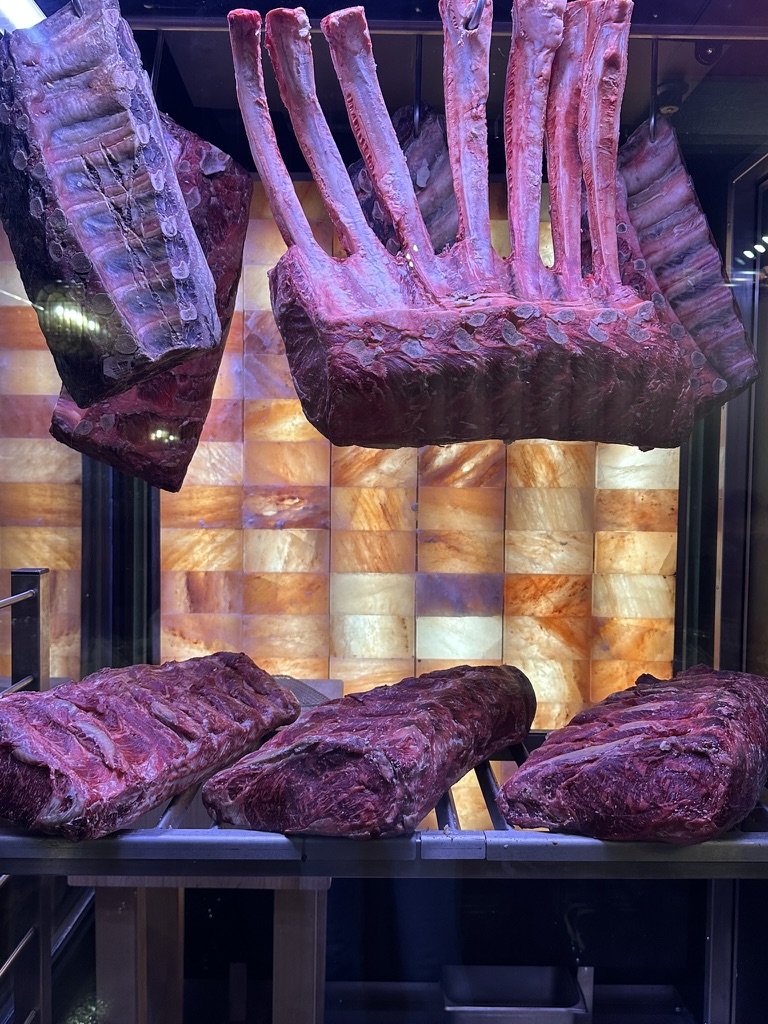
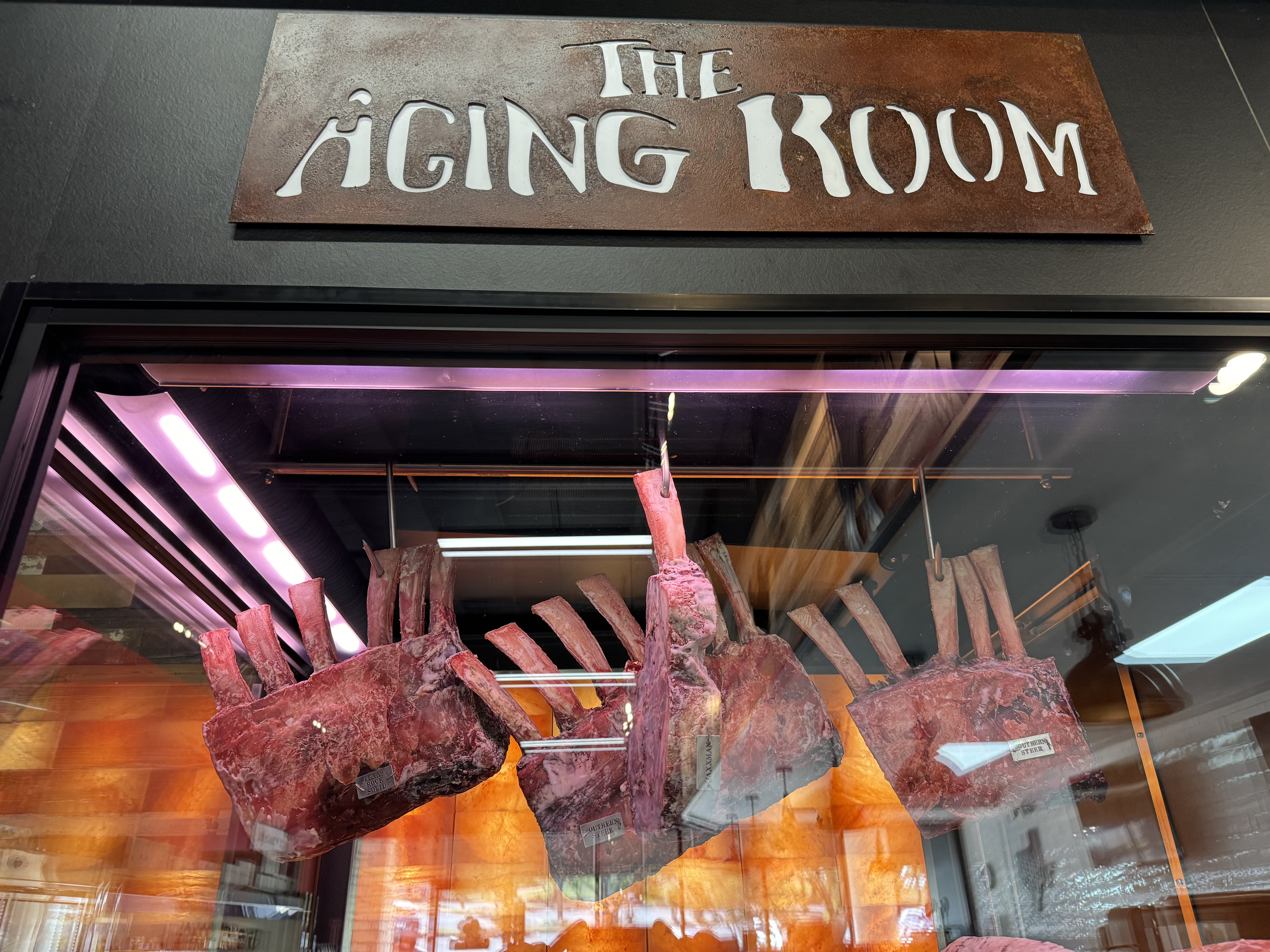
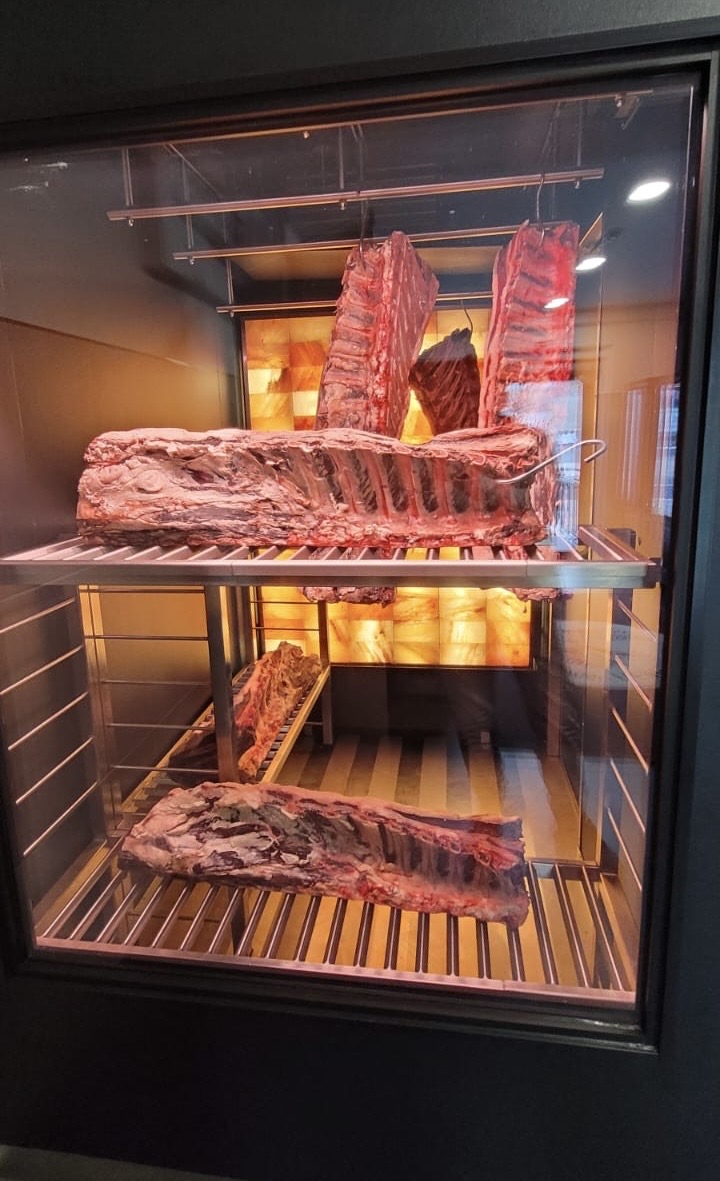
That was the unexpected result of a 75-day dry-aging experiment conducted inside The Aging Room® Himalayan salt dry-aging chamber.
The difference wasn't simply flavor. The extended maturation produced what the evaluator described as significantly greater tenderness and additional complexity, with a texture he compared to extremely high-level Kobe beef.
And the person making that comparison has an unusually extensive frame of reference.
Evaluated by World Master Chef Emeritus Victor Matthews, PhD
World Master Chef Emeritus Victor Matthews, PhD, brings decades of experience in beef, culinary education, restaurant operations, food and beverage, and professional culinary training.
Chef Victor Matthews currently serves as Co-Founder, COO, and Food & Beverage Director of TAVA House. He is the Founder and Dean of Paragon Culinary School, Owner and Master Distiller of Black Bear Distillery, Dean of Theology at Warnborough Ireland/UK, Chief Consultant at E33 Consulting in Wyoming, Chairman of The Council of Spirit Masters, and Founder of Restaurant As Mission, a 501(c)(3) organization.
His experience with beef is particularly relevant to this evaluation.
Chef Matthews estimates that throughout his career he has personally cut and cooked approximately 300,000 steaks, in addition to several hundred thousand burgers. He has written a book, delivered dozens of presentations at beef industry conventions, taught more than 100 college-level beef courses, and sponsored a beef PhD program at Colorado State University.
That depth of experience gave him an extensive frame of reference for comparing conventional dry-aged beef with beef matured inside The Aging Room® Himalayan salt dry-aging chamber.
After evaluating the system and the resulting 75-day bone-in ribeye, Chef Victor described what he observed as something beyond conventional dry aging:
“What you have done is really quite extraordinary. A completely new technique.”
His most important observation was what he described as a shift in the dry-aging timeframe.
In conventional dry aging, increasing time generally intensifies the characteristic dry-aged flavor. Around 45 days is often associated with a pronounced premium dry-aged profile, while considerably longer periods can produce much stronger flavors that may not appeal to every diner.
Inside The Aging Room® dry-aging chamber, Chef Victor observed something different.
Chef Victor observed that the beef continued developing tenderness during the extended aging period, while the development of stronger dry-aged flavors appeared to progress more gradually.
At 75 days, he believed the intensity of the dry-aged flavor was closer to what he would normally expect from approximately 45-day dry-aged beef—but with significantly more tenderness and additional complexity resulting from the extended maturation.
Chef Victor described the difference this way:
“The 75-day age tastes like a 45-day under normal dry-aging conditions.”
The additional month was particularly important to him because the meat had considerably more time to tenderize.
The resulting texture surprised his team.
He described touching the meat as “like touching butter” and compared its tenderness and mouthfeel with extremely high-level Kobe beef—while emphasizing that its flavor remained distinctly dry-aged.
The steak was so tender that the first guests served it were able to cut it with a fork.
For Chef Victor, this combination was the breakthrough: Kobe-like buttery tenderness combined with the concentrated, complex character of premium dry-aged beef.
“The only way to describe it is a magical new creation with the buttery creaminess of Kobe but the flavor of careful dry-aged moisture reduction.”
Chef Victor’s Observations Inside The Aging Room®
Chef Victor also reported notable differences in the appearance and exterior development of the beef.
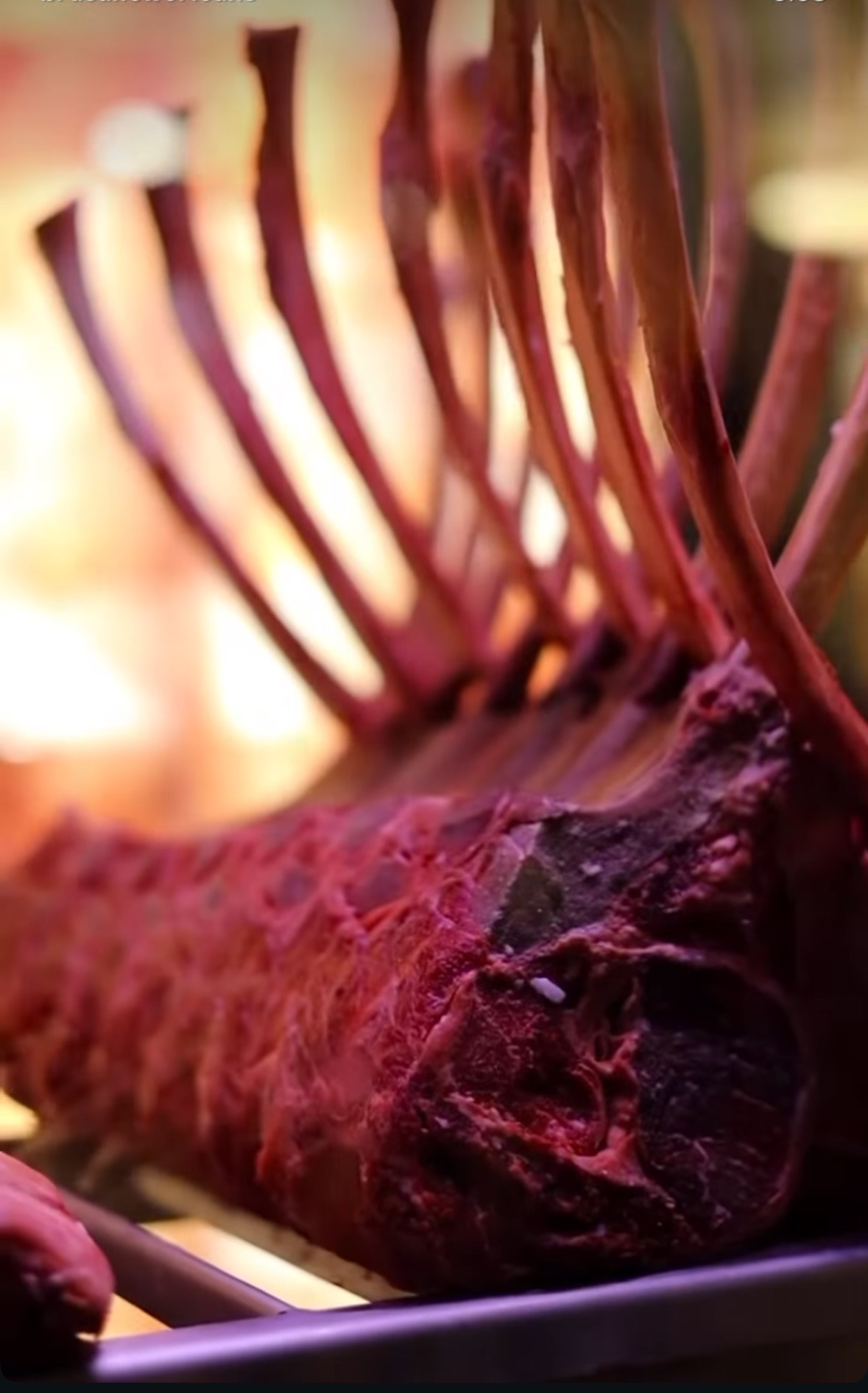
The Himalayan salt dry-aging chamber produced a particularly firm exterior. He observed a light white surface development that he associated with deep dry aging, describing the appearance as though the meat had been lightly dusted with snow.
He reported no undesirable black or green areas during this test.
Chef Victor hypothesized that the micro-saline environment created by the Himalayan salt, combined with the precise temperature, humidity, and airflow control of The Aging Room® dry-aging system, contributed to the slower and more refined maturation he observed.
These mechanisms require controlled scientific study before definitive causal conclusions can be made. The test was also conducted at approximately 9,000 feet elevation, which Chef Victor specifically noted as a variable that may have influenced the results.
Nevertheless, his evaluation of the finished product was unequivocal:
“This is a huge success.”
And after experiencing the final 75-day beef:
“We were stunned… this is a game changer.”
45 Days to 75 Days: A New Question for Dry Aging
Chef Victor’s observations raise an important question for the professional dry-aging industry.
Perhaps the future of commercial dry-aging equipment isn’t simply about maintaining the correct temperature and humidity.
Perhaps the design of the entire microenvironment—including airflow, humidity, temperature, Himalayan salt, and time—can influence how meat develops, not merely how long it can remain inside a dry-aging fridge or dry-aging chamber.
That possibility is what makes the 75-day experiment particularly interesting.
A dry-aging cabinet, dry-aging refrigerator, or dry-aging room is ultimately an environment for biological and physical transformation. The more precisely that environment can be controlled, the greater the opportunity to explore what extended maturation can produce.
Chef Victor summarized the potential of the experiment:
“Creating a Kobe texture with the feel of increased marbling while adding a depth of flavor not seen in Wagyu products… This was simply unheard of before you.”
Further experiments with The Aging Room® are planned using additional beef cuts, bison, lamb, elk, and other proteins.
The objective is no longer simply to determine whether meat can be aged longer.
It is to understand what becomes possible when professional dry-aging equipment provides the environment for time to become an ingredient of its own.
Learn More About The Aging Room® Commercial Dry-Aging Systems
By combining traditional aging processes and modern technology, The Aging Room® uses state-of-the-art climate-control equipment with Himalayan salt to create an aging-friendly, natural microclimate to dry-age steaks to their fullest potential.
The steak rests and ripens in a natural environment, never frozen, vacuum-sealed, or chemically preserved, allowing restaurants, butcheries, and retail shops to utilize every part of the meat.
Learn more about the benefits of The Aging Room® Chamber.