Dry Aging Explained: How Dry-Aged Beef Develops Flavor, Tenderness & Quality
Dry Aging: Quality In, Quality Out
Dry aging is one of the oldest and most effective methods for enhancing the eating experience of premium proteins. Contrary to popular belief, traditional dry aging does not create flavor where none exists. Instead, it concentrates and amplifies the flavor, aroma, and texture already present in the meat.
Simply put, dry aging is an amplifier, not a transformer. It enhances the natural qualities of the product but cannot change its inherent grade or quality. Start with exceptional beef, and you'll achieve exceptional dry-aged beef. Start with lower-grade beef, and you'll simply produce a more concentrated expression of that same lower-grade product. Dry aging magnifies quality—it does not create it.
As proteins age in a controlled open-air environment, moisture gradually evaporates. This natural dehydration concentrates existing flavor compounds while enzymes slowly break down muscle fibers, improving tenderness. The result is a richer, more intense beef flavor and a more refined texture.
This is why the quality of the meat entering the aging room is critical.
If you place USDA Select beef in an Aging Room, you will end up with a more concentrated Select flavor. If you place USDA Prime beef in the same environment, you will achieve a more concentrated Prime flavor. Dry aging magnifies quality!
In other words, what you put into the aging room is what you get back, only more intense.
Aging parameters such as temperature, humidity, and airflow can be adjusted to accelerate or slow down the aging process. Our aging rooms carefully control these variables to create optimal conditions for flavor development and tenderness. However, no amount of aging can transform Select beef into Prime beef. That is simply not possible.
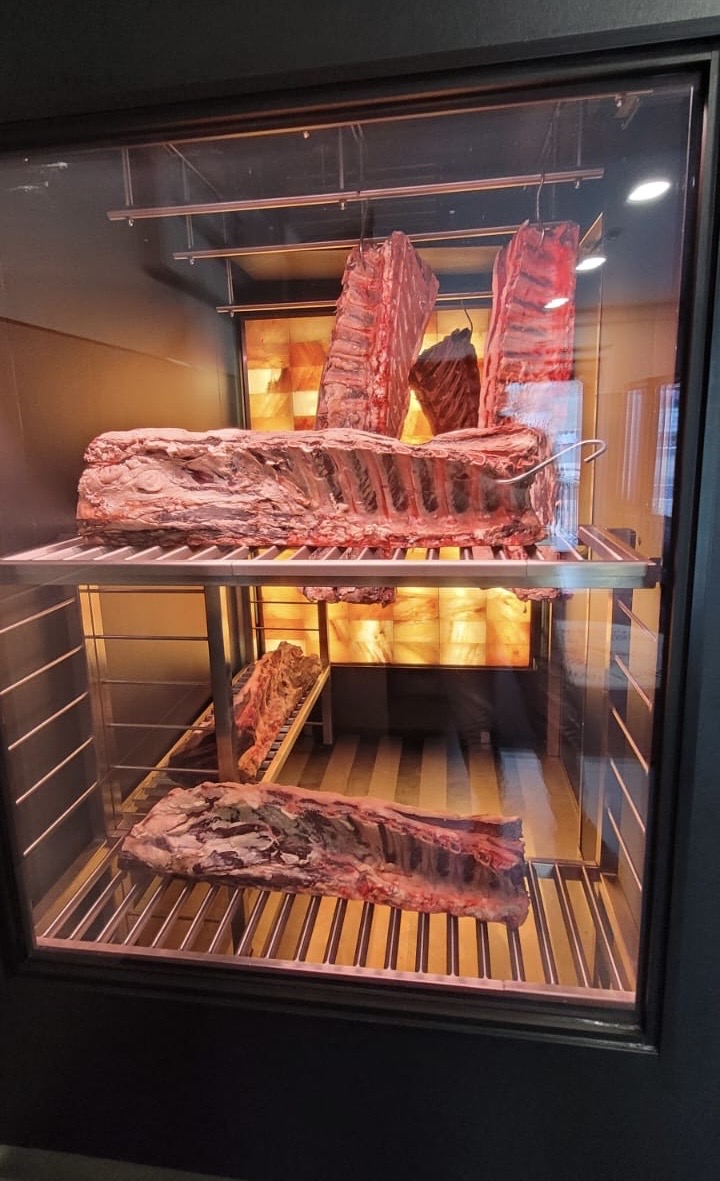
A professional aging room maintains precise control of temperature, humidity, and air circulation while allowing meat to age in open air. Unlike vacuum-sealed wet aging, open-air dry aging encourages gradual moisture evaporation and flavor concentration, producing the distinctive character that chefs and consumers associate with premium dry-aged beef.
How Dry Aging Actually Works
Dry aging is a natural biological and physical process that develops flavor, aroma, and tenderness. No chemicals, additives, or flavoring agents are introduced. Instead, the meat's natural chemistry evolves under carefully controlled conditions.
Enzymatic Tenderization
After harvest, naturally occurring enzymes remain active within the muscle. Proteolytic enzymes such as calpains and cathepsins gradually break down muscle fibers and connective tissue.
Most tenderness development occurs during the first one to two weeks, although enzymatic activity continues at a lower rate over longer aging periods. These enzymatic changes contribute not only to tenderness but also to overall flavor development.
Lipid Oxidation and Flavor Formation
Fat plays a major role in dry-aged flavor.
Natural lipases release free fatty acids, which slowly oxidize and create aromatic compounds such as aldehydes and ketones. These compounds are responsible for the nutty, buttery, roasted, and complex flavors often associated with premium dry-aged beef.
The higher the marbling, the greater the potential for flavor development. This is one reason why Prime beef generally produces superior dry-aged results compared to lower grades.
Moisture Migration and Flavor Concentration
Water naturally migrates from the interior of the muscle toward the surface, where it evaporates into the surrounding environment.
As moisture is removed, proteins, fats, minerals, and flavor compounds become more concentrated. The goal is controlled moisture loss—not rapid dehydration. Excessively fast drying can create case hardening, where the exterior dries too quickly and limits proper aging within the meat.
Dry aging is fundamentally a subtractive process. Water leaves the product while flavor intensity increases.
Environmental Stability
Successful dry aging depends on maintaining stable environmental conditions, including:
- Temperature typically between 2–4°C (35–39°F)
- Relative humidity between approximately 70–85%
- Consistent airflow around the product
These conditions allow biological processes to proceed in a predictable manner while protecting product quality and food safety.
The Role of Himalayan Salt
One common misconception is that Himalayan salt seasons the meat during aging. In reality, its primary role is environmental rather than culinary.
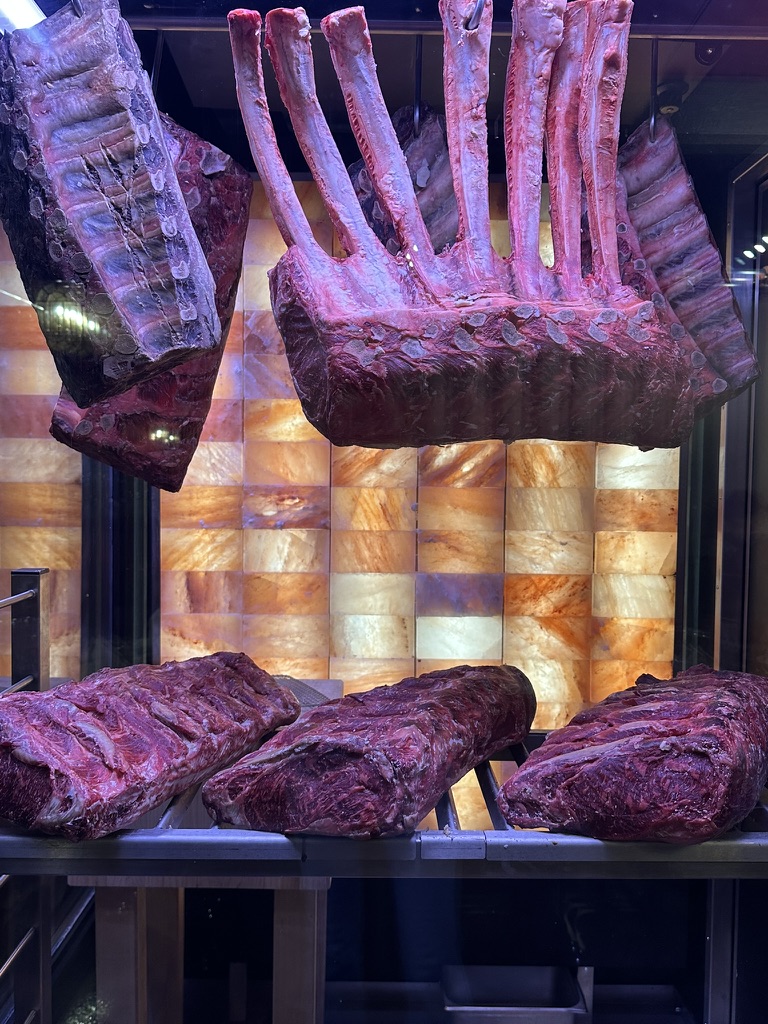
Himalayan salt is hygroscopic, meaning it naturally absorbs and releases moisture depending on surrounding conditions. Within a properly designed aging room, salt acts as a passive humidity buffer that helps stabilize environmental fluctuations.
The salt remains external to the meat and does not penetrate the muscle tissue.
This stabilization supports:
- Consistent dehydration kinetics
- Reduced condensation risk
- Stable crust formation
- Predictable flavor concentration
- Improved yield control
When environmental conditions remain stable, moisture migration occurs more uniformly, leading to more consistent aging results and improved product yields.
How an Aging Room Works
A professional aging room creates a stable biological environment through precise control of:
- Temperature
- Relative humidity
- Airflow
- Environmental microclimate
The process follows several key stages:
1. Conditioned Air Circulation
Air circulates evenly around stationary meat. The meat remains fixed while conditioned air moves throughout the chamber, promoting consistent drying and environmental exchange.
2. Microclimate Stabilization
Salt walls and other environmental controls help regulate humidity and minimize fluctuations within the chamber.
3. Controlled Moisture Migration
Water gradually evaporates from the meat surface into the surrounding air. Proper humidity control prevents excessive drying while encouraging steady dehydration.
4. Flavor Development and Concentration
As moisture content decreases, proteins and fats become increasingly concentrated. Simultaneously, enzymatic and oxidative processes continue to develop deeper umami character and more complex flavor profiles.
What Meats Can Be Dry Aged?
While beef remains the most popular product for dry aging, many other proteins can benefit from the process, including:
- Beef subprimals
- Bone-in ribeyes
- Strip loins
- Pork loins and pork racks
- Lamb
- Certain game meats
The best candidates are cuts with sufficient fat cover and marbling, as these characteristics help protect the meat during aging and contribute to superior flavor development.
Conclusion
The lesson is simple: dry aging enhances quality!
You can accelerate or slow the process by adjusting environmental conditions. You can influence moisture loss, tenderness development, and flavor concentration. What you cannot do is transform Select beef into Prime beef.
Start with exceptional meat, maintain a stable aging environment, and dry aging will reward you with an even more exceptional product!
Learn More About The Aging Room®'s Chamber
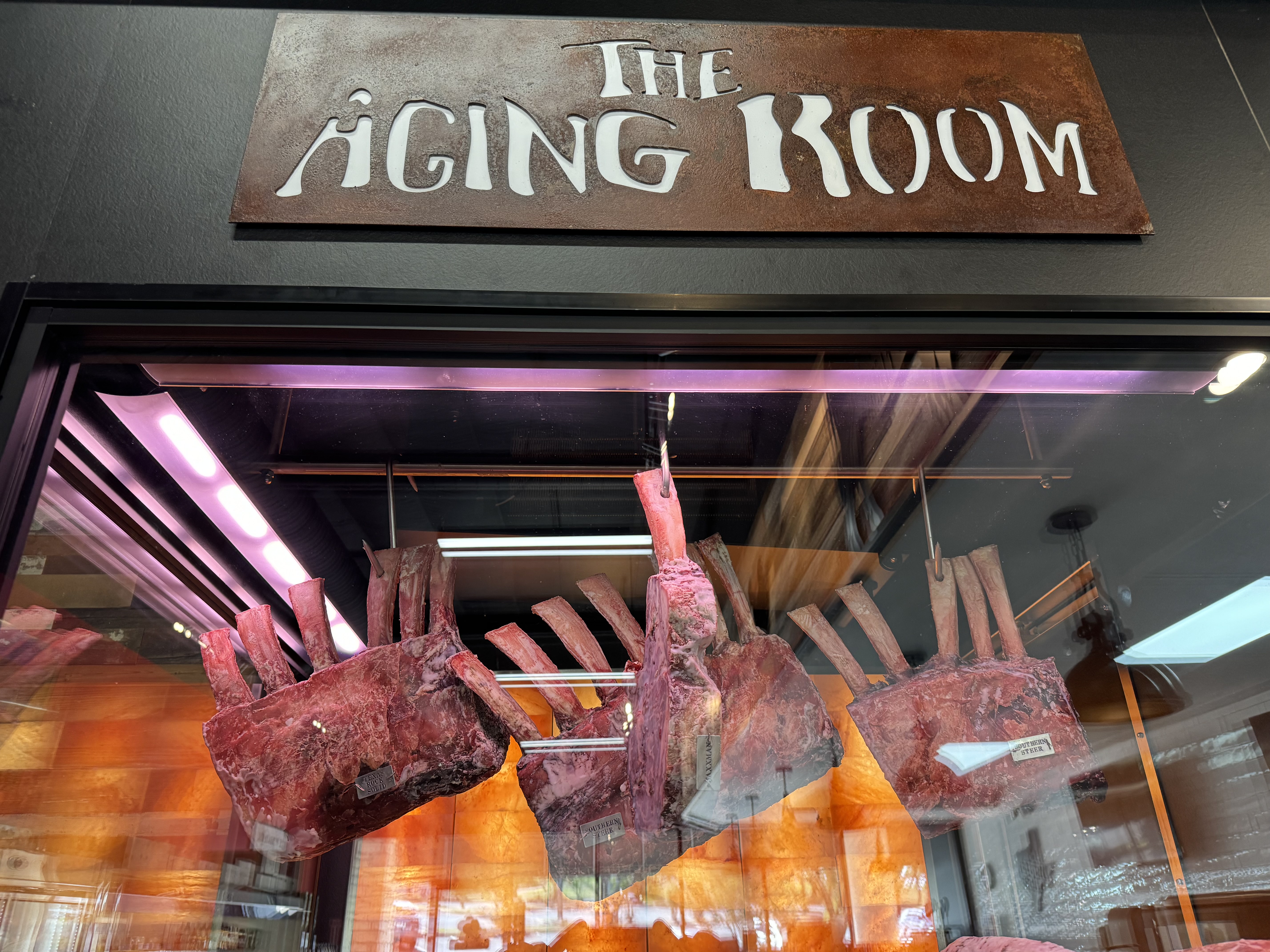
By combining traditional aging processes and modern technology, The Aging Room® uses state-of-the-art climate control equipment with Himalayan salt to create an aging-friendly, natural microclimate to dry-age steaks to their fullest potential. The steak rests and ripens in a natural environment, never frozen, vacuum-sealed, or chemically preserved, allowing restaurants, butcheries, and retail shops to utilize every part of the meat. Learn more about the benefits of The Aging Room Chamber.